
Homeschooling in West Virginia— file once, then test in grades 3, 5, 8, and 11.
West Virginia keeps the paperwork light up front and the proof on a schedule. You file a one-time Notice of Intent with your county superintendent before you begin home instruction — no annual refiling unless you move counties. The instructor needs a high school diploma or GED, or a post-secondary degree or certificate from a regionally accredited institution. The real cadence is assessment: results for grades 3, 5, 8, and 11 go to the county superintendent by June 30, and you keep your copies for three years. Lightstead's West Virginia profile stages the one-time NOI and surfaces the testing-grade deadlines before they arrive.
What West Virginia requires, at a glance.
- Notice
One-time NOI
Notice of Intent filed with the county superintendent before beginning home instruction. Update only if you move counties.
- Days / hours
Not specified
Statute sets no instructional day or hour count. The grade-band assessment is the proof artifact, not a calendar.
- Subjects
5 required
W. Va. Code § 18-8-1 requires instruction in reading, language, mathematics, science, and social studies; the parent picks materials, scope, and sequence.
- Assessment
Grades 3 · 5 · 8 · 11
Results submitted to the county superintendent by June 30 of the applicable year. Four approved assessment types.
- Acceptable progress
4th stanine
Mean score within or above the 4th stanine (~23rd percentile), or improvement from the prior year if below it.
- Teacher qualification
Diploma / GED+
Instructor holds a HS diploma or GED, or a post-secondary degree or certificate from a regionally accredited institution.
- Assessment options
4 options
Nationally normed test · state public-school testing program · certified-teacher portfolio review · mutually-agreed alternative.
- Records retention
3 years
Parent retains copies of the assessment results for three years.
§1
File once with the county superintendent — before you begin.
West Virginia's main home-instruction path requires a one-time Notice of Intent filed with the county superintendent before home instruction begins. Unlike the annual-refiling states, the NOI is not repeated every year — you file it once and it stands, as long as you keep instructing the same children in the same county. The one repeat trigger is a move: if you relocate to a different county, you file a new NOI with the superintendent of the new county. There is no statewide registry — compliance is county by county, so the local superintendent's office is the office that holds your filing.
W. Va. Code § 18-8-1
The West Virginia NOI wizard pre-fills your children's data and outputs a PDF ready for the county superintendent. Because the filing is one-time, Lightstead marks it done once submitted and only re-prompts you if you record a county move.
West Virginia NOI wizard
§2
Diploma, GED, or a regionally accredited credential.
The person providing home instruction must hold a high school diploma or a General Educational Development (GED) certificate, or a post-secondary degree or certificate from a regionally accredited institution. This is a one-time eligibility check tied to the instructor, established when you file the Notice of Intent. There is no separate state-issued teaching license requirement for the NOI path. The diploma/GED bar is the floor; a college degree or accredited post-secondary certificate also satisfies it. The qualification attaches to whoever delivers the instruction, so keep documentation of the qualifying credential with your records.
W. Va. Code § 18-8-1
Lightstead's West Virginia profile records which qualifying credential your instructor holds alongside the NOI, so the eligibility basis lives next to the filing it supports rather than in a separate drawer.
Filings & qualification record§3
Test in grades 3, 5, 8, and 11 — submit by June 30.
West Virginia requires assessment results only in the benchmark grades: 3, 5, 8, and 11. The results for the applicable grade must be submitted to the county superintendent by June 30 of that year. In the years between benchmark grades, there is nothing to submit — the cadence is every few years, not annual. Four assessment types are approved: (1) a nationally normed standardized test; (2) the state public-school testing program; (3) a portfolio review by a certified teacher with a written narrative; or (4) an alternative assessment mutually agreed upon with the county superintendent. Most families choose the nationally normed test or the certified-teacher portfolio review; the alternative requires prior agreement with the superintendent.
W. Va. Code § 18-8-1
Lightstead's West Virginia profile knows which grade each child is in and only raises the June 30 assessment deadline in benchmark years. The dashboard deadline card appears ahead of the due date so a grade-3, 5, 8, or 11 year never sneaks up on you.
Assessment deadline cards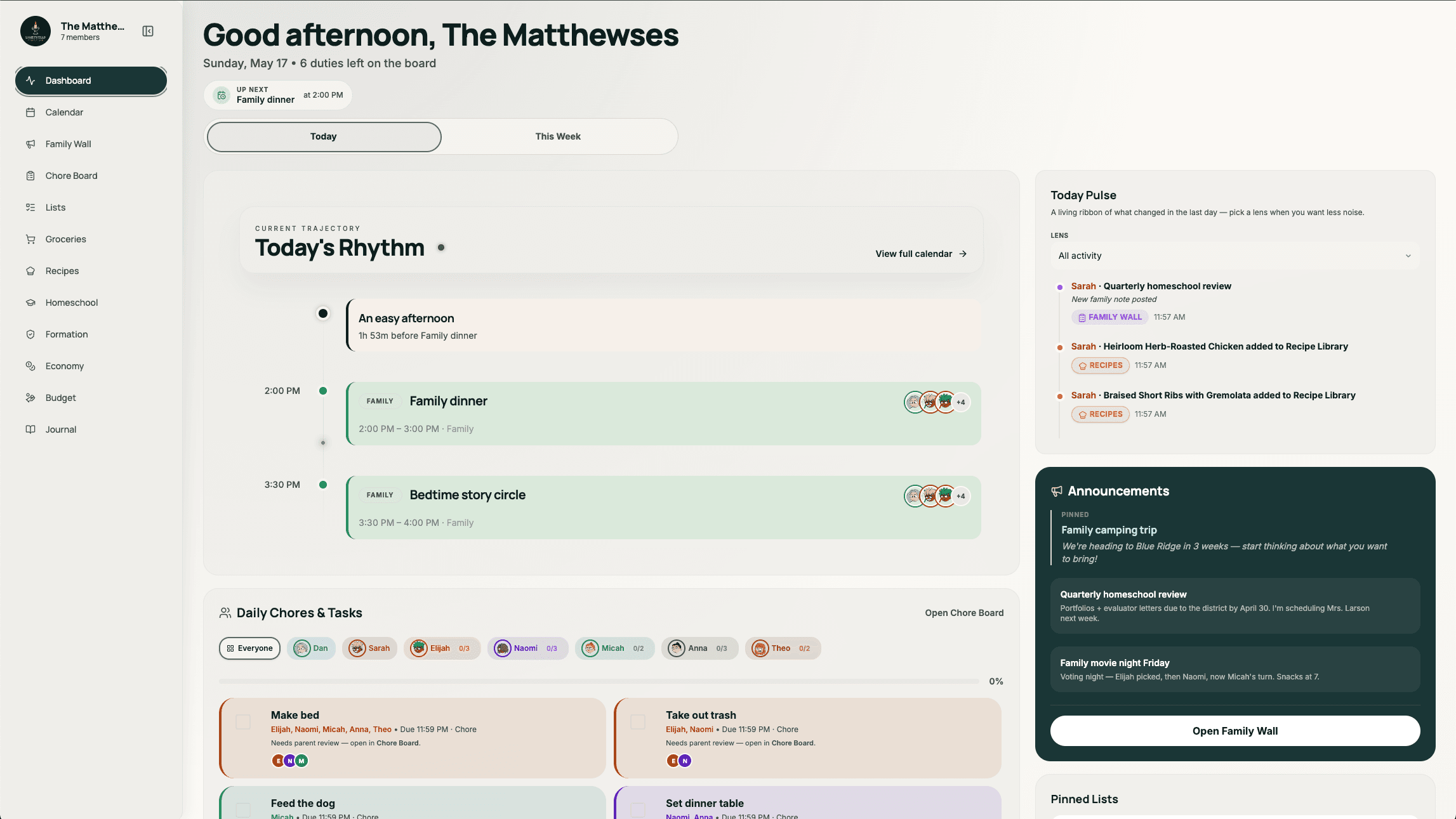
§4
What counts as a passing result.
Acceptable progress is a mean score within or above the 4th stanine — approximately the 23rd percentile — on the assessment. If a child's score falls below the 4th stanine, progress can instead be shown by improvement over the prior year's result. The 4th-stanine threshold is generous: the 23rd percentile is below average but well within the normal range, so a child performing close to grade level satisfies it. The improvement-over-prior-year provision is a built-in safety valve — a below-stanine year that nonetheless shows growth still demonstrates acceptable progress.
W. Va. Code § 18-8-1
When you enter a benchmark-grade score, Lightstead records it against the 4th-stanine threshold and keeps the prior result on hand so the improvement-over-last-year path is one comparison away rather than a hunt through old files.
Records & score history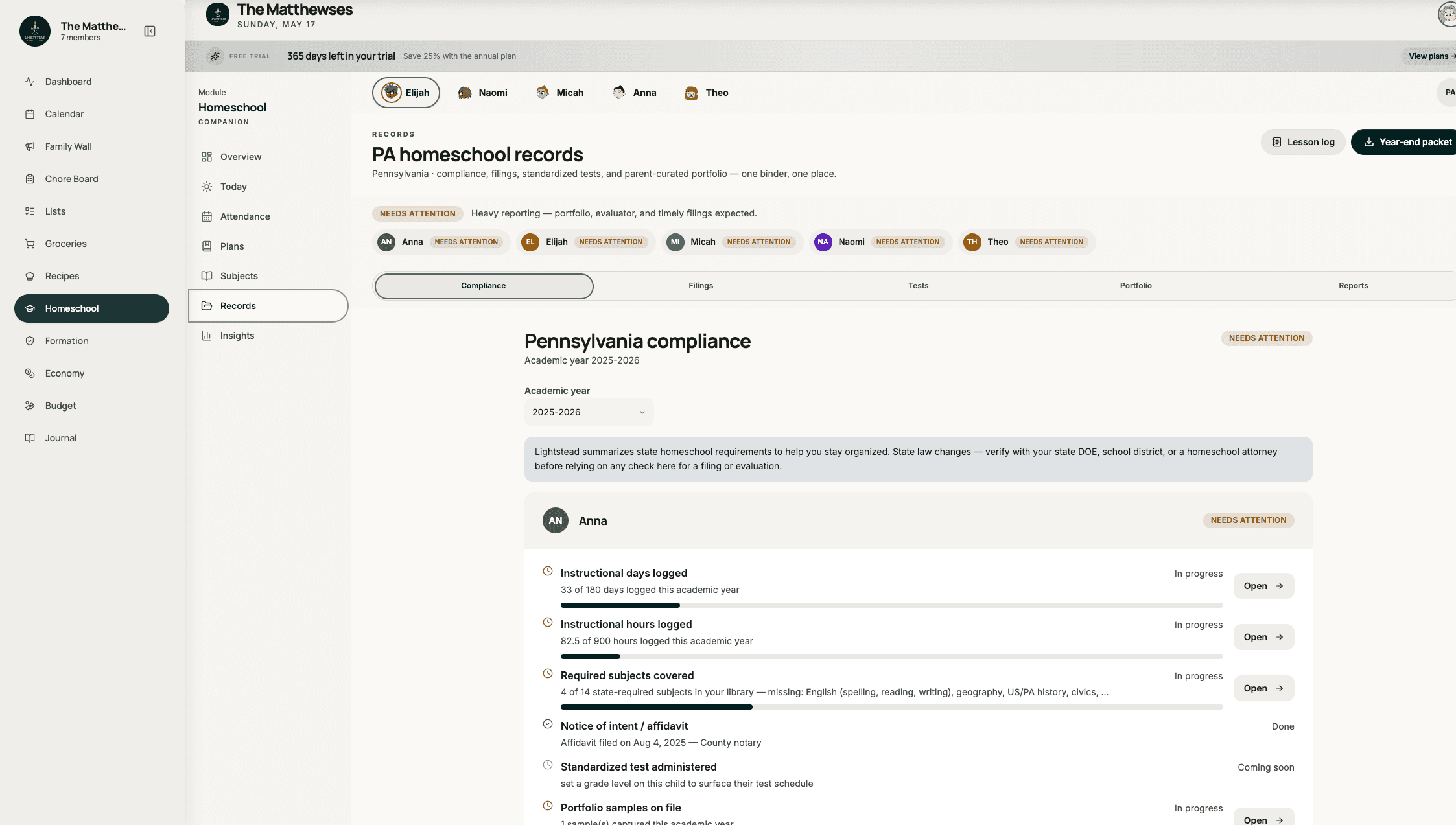
§5
Keep your assessment copies for three years.
The parent retains copies of the assessment results for three years. The submission goes to the county superintendent in benchmark years, but the family keeps its own copies — the three-year window is the parent's recordkeeping obligation, separate from the act of submitting. This is the record your future self will want anyway. A college application, a move to a stricter state, or a return to public school all go more smoothly when the benchmark-grade results are filed and retrievable rather than reconstructed from memory.
W. Va. Code § 18-8-1
Lightstead's records packet keeps every benchmark-grade result together in one place, so the three-year retention window takes care of itself and the assessments are export-ready whenever a college, a district, or a new state asks.
Records & portfolio packetWhat people search for when they look up West Virginia homeschooling.
Do I have to register my homeschool in West Virginia?
You file a one-time Notice of Intent with your county superintendent before you begin home instruction. It is not refiled every year — the NOI stands as long as you keep instructing the same children in the same county. The one repeat trigger is moving to a different county, which requires a new NOI with the new county's superintendent.
How often does West Virginia require homeschool testing?
Only in benchmark grades: 3, 5, 8, and 11. In the years between those grades there is no assessment to submit. When a child is in a benchmark grade, the results go to the county superintendent by June 30 of that year.
What assessment options does West Virginia accept?
Four: (1) a nationally normed standardized test; (2) the state public-school testing program; (3) a portfolio review by a certified teacher with a written narrative; or (4) an alternative assessment mutually agreed upon with the county superintendent. Most families use the nationally normed test or the certified-teacher portfolio review.
What score does West Virginia consider acceptable progress?
A mean score within or above the 4th stanine — roughly the 23rd percentile. If a child scores below the 4th stanine, acceptable progress can instead be shown by improvement over the prior year's result.
Does West Virginia require a certain number of school days or hours?
No. The statute does not set an instructional day or hour count for the home-instruction path. The benchmark-grade assessment is the proof artifact, not a day or hour log.
What are the parent qualifications to homeschool in West Virginia?
The instructor must hold a high school diploma or a GED, or a post-secondary degree or certificate from a regionally accredited institution. There is no separate state teaching license requirement for the Notice of Intent path.
What subjects does West Virginia require homeschoolers to teach?
W. Va. Code § 18-8-1 requires instruction in reading, language, mathematics, science, and social studies. The parent still picks the materials, scope, and sequence, and acceptable progress is demonstrated through the benchmark-grade assessment rather than a state-graded subject checklist.
When is the West Virginia homeschool assessment due?
By June 30 of the applicable benchmark year — that is, the year a child is in grade 3, 5, 8, or 11. Results are submitted to the county superintendent.
How long do I have to keep my West Virginia homeschool assessment results?
Three years. The parent retains copies of the assessment results for three years, separate from submitting them to the county superintendent in benchmark years.
Do I have to refile my West Virginia Notice of Intent every year?
No. The NOI is one-time. You refile only if you move to a different county, in which case you submit a new Notice of Intent to the superintendent of the new county.
What happens if my child scores below the 4th stanine in West Virginia?
A below-stanine score is not an automatic failure. Acceptable progress can also be shown by improvement over the prior year's result, so a year that scores below the 4th stanine but demonstrates growth still satisfies the standard. Keep the prior year's result on hand to make that comparison.
Related state guides
Stop tracking West Virginia compliance in a spreadsheet.
14-day free trial. No credit card. We'll set up your filings, your hour log, and a portfolio starting point for West Virginia.
Start free trial