Homeschooling in New York— the IHIP state — homeschool with a state-style plan.
New York treats every homeschool like a small private school: a 28-day Individualized Home Instruction Plan (IHIP) after your Notice of Intent (NOI), four quarterly reports per year, a 10-subject required list that runs from patriotism to PE, and three different assessment regimes by grade band. New York City's Department of Education (DOE — your city's, not federal) codifies a seven-year retention rule that many upstate districts apply as convention. Lightstead's NY wizard files the IHIP, tracks the quarters, and flags the 33rd-percentile threshold so probation never sneaks up.
What New York requires, at a glance.
- Notice
Jul 1 · annually
Written NOI to local district, then a 28-day window to submit your IHIP for district approval.
- Days / hours
900 / 990 hrs
Elementary · secondary. NY does not specify a minimum number of days — only the hours. Most families plan 36 weeks at ~28 hrs/wk.
- Subjects
10 required
Patriotism/citizenship, US history, English, geography, science, math, health, music, art, PE — all ten taught annually.
- Assessment
Narrative + test
Narrative evaluations in grades 1–3, alternating norm-ref test/narrative in 4–8, annual standardized tests in 9–12.
- Pathway
NOI + IHIP
No tutor or private-school satellite shortcut — every NY homeschooler runs an IHIP, every year, regardless of tenure.
- Quarterly reports
4 / year
Filed with the district. Progress narrative + hours per subject. Lightstead pre-fills from the year's actual instructional record.
- Threshold
33rd percentile
Composite below 33rd triggers a probation year + remediation plan. Lightstead flags this on the score-entry screen with a warning banner.
- Retention
7 years (NYC DOE)
NYC DOE requires 7-year retention as policy; § 100.10 is silent on a specific statewide window. Many districts apply the 7-year convention; verify with yours.
§1
NOI by July 1, IHIP within 28 days.
NY families file a written Notice of Intent with the local school district by July 1 of each year (or within 14 days of beginning home instruction mid-year). The district responds within 10 business days with a copy of § 100.10 and an IHIP form. Within 28 days of receiving that packet, the family submits an Individualized Home Instruction Plan naming subjects, hours per week, curriculum titles, and the year's assessment method. The IHIP isn't an application — the district can't deny it on substantive grounds. They can only flag missing required elements (e.g., a missing subject) and request a corrected version. Most first-time IHIPs are approved on first review when all ten subjects are present and the hours sum to the statutory minimum.
8 NYCRR § 100.10(d)
The NY wizard starts you off with the core required-subject list (English language arts, math, science, social studies, health, PE, visual arts/music) and lets you add the rest of the state-required subjects. Assign hours per week per subject, attach curriculum titles, write the assessment-method statement, and export the IHIP as a signed PDF. The 28-day clock visibly resolves on Today's dashboard once you send it.
NY IHIP wizard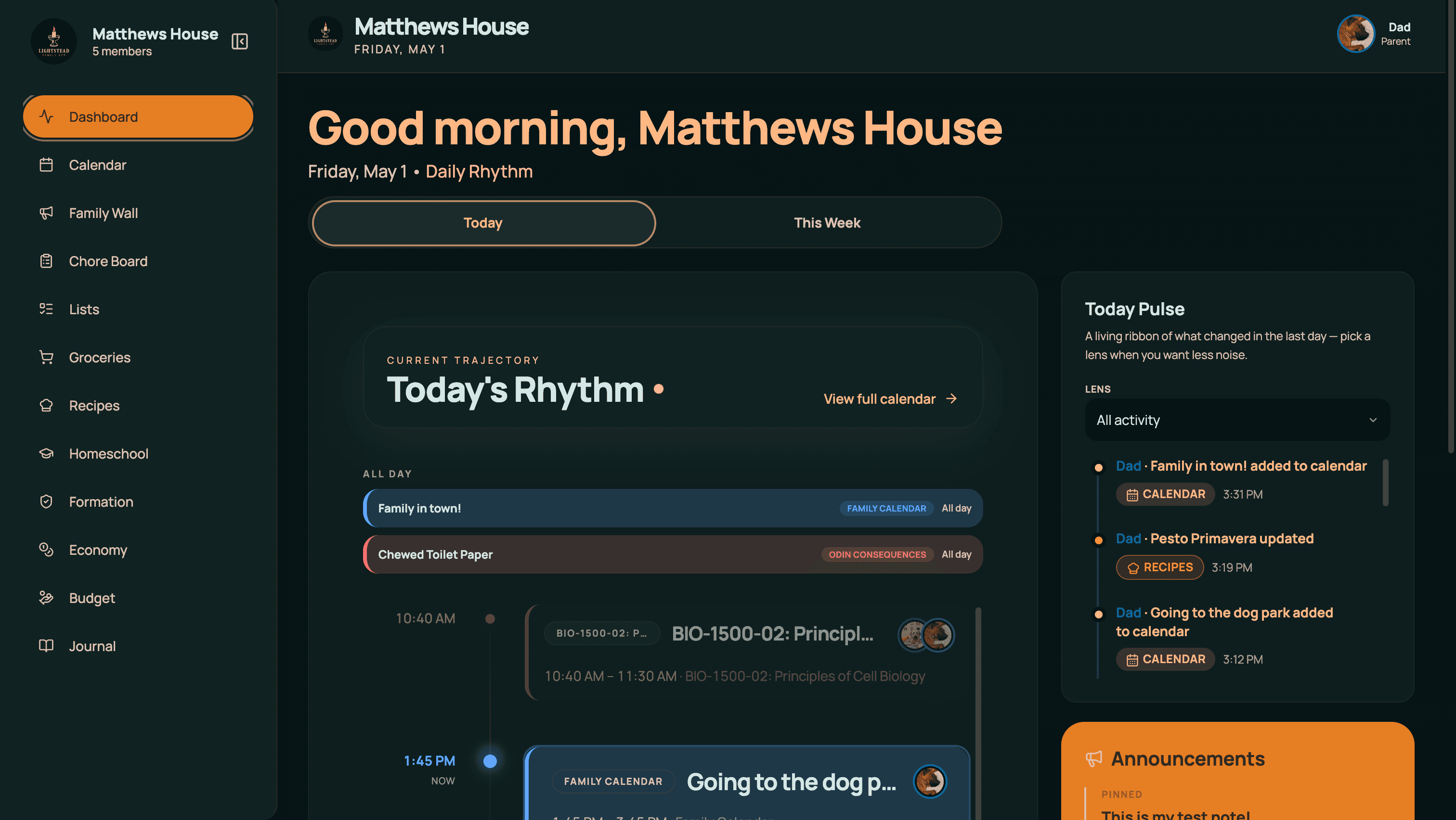
§2
Four progress reports — not four scrambles.
NY requires four quarterly reports per year, filed with the district at roughly the quarter marks of your IHIP-defined school year. Each report names hours of instruction per subject for the quarter, materials covered, and a narrative paragraph or two of the child's progress. The district checks that you're on pace toward the IHIP's annual hours and that none of the ten subjects has been silently dropped. Missed reports can place the home instruction program on probation. Two consecutive probation years can trigger enrollment in a public or private school. The reports themselves don't need to be long — a page or two per child — but they do need to be filed.
8 NYCRR § 100.10(g) · § 100.10(h)(2)
Lightstead rolls up attendance, lessons, and assignments into a quarterly PDF organized by your IHIP's subjects. You read it, add the narrative paragraph, sign, and send. The quarter clock lives on the dashboard so you're never blindsided — and the prior three quarters stay a tap away when you draft the fourth.
Quarterly report generation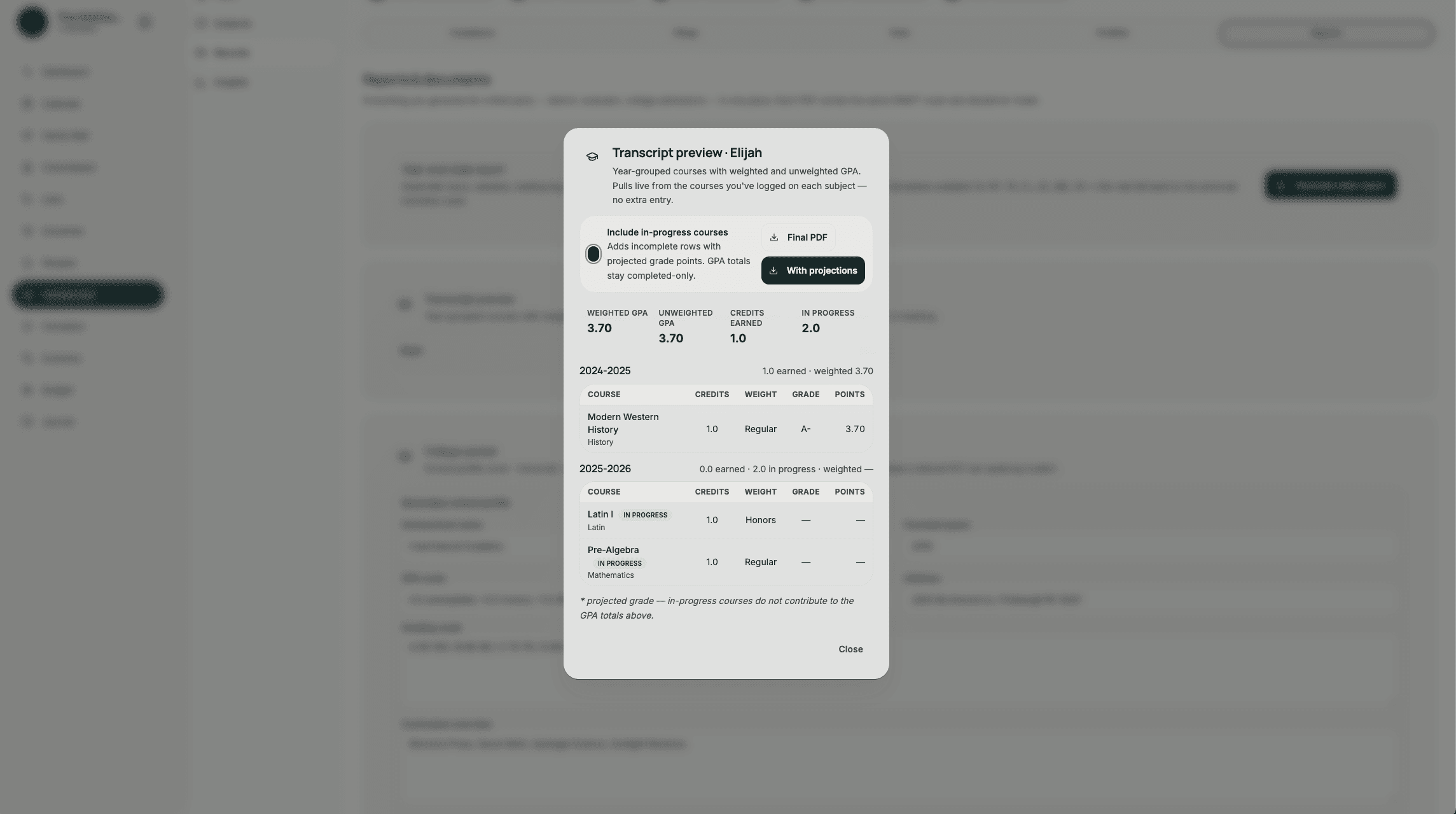
§3
Three different assessment regimes by grade.
Grades 1–3 file a narrative parent evaluation each year — no testing required. Grades 4–8 alternate between a norm-referenced standardized test (one year) and a narrative parent evaluation (the next). Grades 9–12 file a standardized test result every year. Approved tests under § 100.10(h) include the CAT, Iowa, Stanford, PASS, and a small handful of others. The SAT and ACT are NOT on the § 100.10(h) approved-test list, though some districts accept them as superintendent-approved equivalents under § 100.10(h)(4) — check with your specific district before relying on a college-admissions test. The state threshold is the 33rd percentile composite. Score below it and the home instruction program goes on probation: the family submits a remediation plan, the district approves it, and the next year's test must show measurable progress. Two consecutive probation years can lead to compelled enrollment.
8 NYCRR § 100.10(h)
The score-entry screen knows which regime applies to which child by grade and previous-year choice (you only pick alternation once per child). Below-threshold composites raise a probation banner with the exact corrective-plan steps the regulation calls for and links to template remediation plans.
Standardized tests + probation handling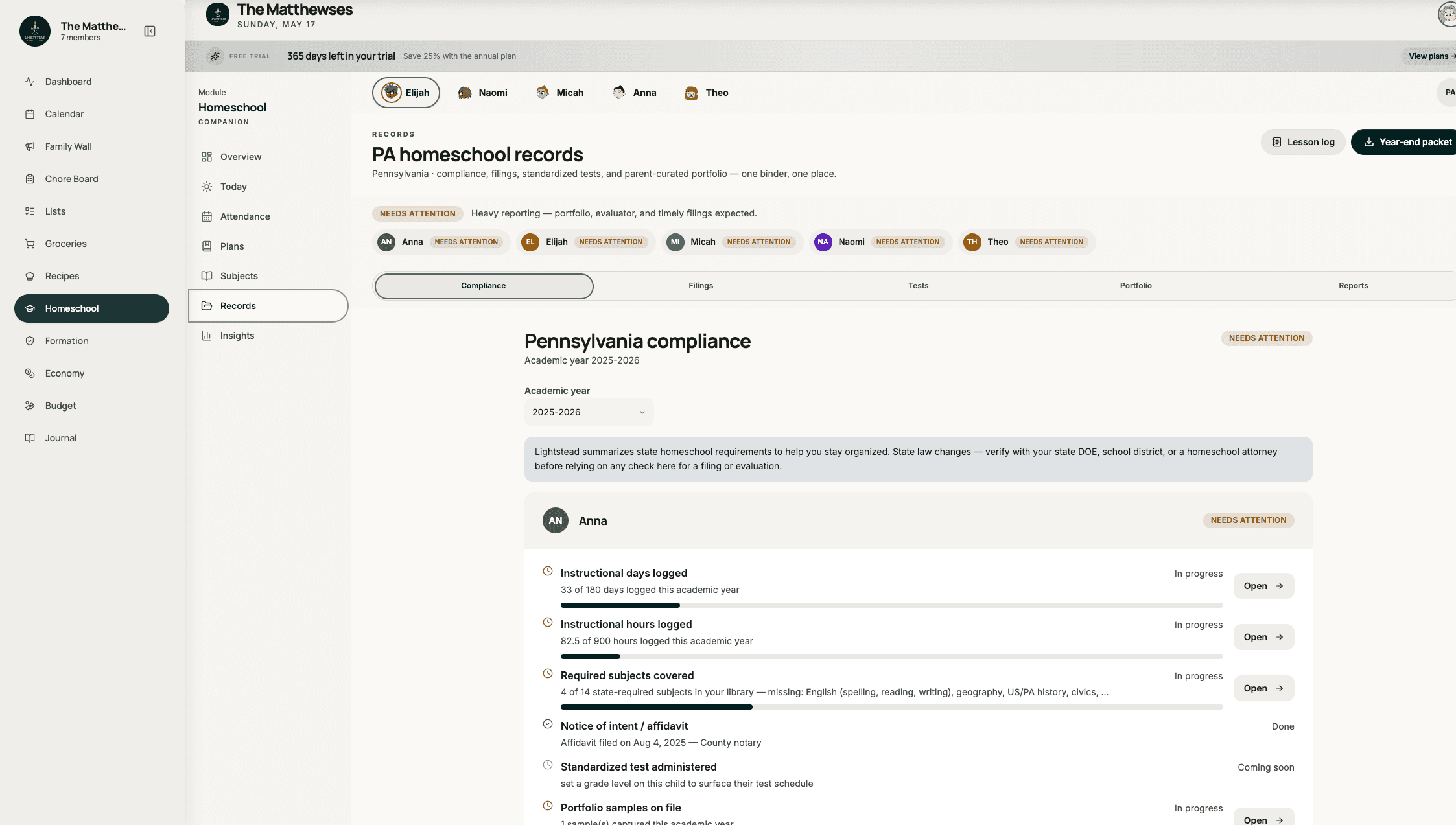
§4
Plan for seven-year retention — especially in NYC.
NYC DOE explicitly requires home-instruction records and assessments retained for seven years. The statewide § 100.10 regulation itself doesn't fix a specific retention window, so practice outside the five boroughs varies — many upstate districts apply the same seven-year convention, some don't, and the safe assumption is to plan as if your district might. Long enough either way that a paper folder is the wrong tool. The records that count: each year's IHIP, all four quarterly reports, the standardized test score certificate (or the narrative evaluation), and the parent's correspondence with the district. The district can request your records during the retention window if a complaint or audit is opened.
NYC DOE policy (statewide 8 NYCRR § 100.10 is silent on a retention window)
Every IHIP, quarterly report, test score, and portfolio export stays in your account permanently. Pull last year's — or year six's — as a single dated PDF whenever the district asks. NYC's seven-year retention rule (and any upstate district that applies the same convention) becomes a Lightstead feature, not your filing problem.
Records & retentionWhat people search for when they look up New York homeschooling.
Do I need to file an IHIP every year in NY?
Yes. Every NY homeschooler files a fresh IHIP within 28 days of the Notice of Intent — every year, even for a child who has been homeschooled for a decade. The format can be carried forward from the prior year, but a new signed copy goes to the district annually.
How many hours does NY require?
900 hours per academic year for elementary students (grades 1–6) and 990 hours for secondary (grades 7–12). NY does not specify a minimum number of days — only total hours. Most families plan around 36 weeks at ~28 hrs/wk for elementary, slightly more for secondary.
What happens if my child scores below the 33rd percentile?
NY places the home-instruction program on probation. The family files a remediation plan with the district; the district approves it; the next year's assessment must show measurable progress. A second consecutive below-threshold year can trigger compelled enrollment in a public or private school.
When are NY quarterly reports due?
Roughly at quarter marks of your IHIP-defined school year — most families file in mid-November, late January, mid-April, and late June. Each report covers hours by subject, materials covered, and a one-to-two-paragraph progress narrative. The district can't reject a report on substantive grounds, only for missing required elements.
Can I use a co-op or umbrella school in NY?
NY does not recognize an umbrella-school pathway. Every NY family files its own NOI and IHIP and submits its own quarterly reports — even when the day-to-day teaching happens in a co-op. Co-ops can supply curriculum and instruction, but they don't satisfy any of the reporting obligations.
What subjects does NY require?
Ten subjects: patriotism and citizenship, US history, English, geography, science, math, health, music, art, and physical education. High school adds 4 years of English, 4 years of social studies, 2 of math, 2 of science, art/music, health, PE, and electives. Lightstead's NY IHIP wizard starts you off with the core required-subject list; the full state list is added during IHIP setup.
How long do I keep NY homeschool records?
NYC DOE requires 7-year retention as policy; the statewide § 100.10 regulation itself doesn't fix a specific window, so practice outside the five boroughs varies. Many upstate districts apply the same seven-year convention; the safe assumption is to plan as if your district might. Lightstead keeps records indefinitely so the rule becomes a stored-record feature, not your filing problem.
Is the NY IHIP hard to write the first time?
The wizard starts you off with the IHIP structure (subject list, hours/week, materials, assessment method) — most first-year families finish the IHIP in 30–45 minutes once curricula are picked. The hardest part is picking the curricula; the IHIP itself is paperwork around those choices.
Related state guides
Stop tracking New York compliance in a spreadsheet.
14-day free trial. No credit card. We'll set up your filings, your hour log, and a portfolio starting point for New York.
Start free trial