
Homeschooling in Georgia— the September 1 state — annual DOE filing, every-3-years testing.
Georgia files a Declaration of Intent (DOI) annually with the state Department of Education (DOE — your state's, not federal) by September 1, runs 180 days at 4.5 hours per day, and tests every three years starting in grade 3. The annual progress report is retained for three years (not submitted). Five required subjects, a high school diploma minimum for the parent, and standardized testing in grades 3, 6, 9, and 12. Lightstead's GA profile shows the Sept 1 deadline, holds the test-grade reminders, and produces the 3-year retention packet automatically.
What Georgia requires, at a glance.
- Notice
Sep 1 · annually
Declaration of Intent to GA Department of Education by September 1 (or within 30 days of starting).
- Days / hours
180 days · 4.5 hrs/day
180 instructional days per year at minimum 4.5 hours per day. Equivalent to ~810 hours annually.
- Subjects
5 required
Reading, language arts, math, social studies, science. Parent picks scope, sequence, and materials.
- Assessment
Test grades 3, 6, 9, 12
Nationally normed standardized test every 3 years starting grade 3 (grades 3, 6, 9, 12). Scores kept on file (not submitted).
- Pathway
Declaration of Intent
Single pathway — home study program registered annually with the Georgia Department of Education (DOE) via a Declaration of Intent.
- Teacher qualification
HS diploma / GED
Supervising parent must hold at least a high school diploma or GED.
- Annual progress
Written report
Annual progress report on each child, retained 3 years. Not submitted unless requested.
- Attendance
Records kept
Attendance records maintained but not submitted. DOE may request inspection.
§1
September 1 — every year, to the state DOE.
Georgia requires a Declaration of Intent (DOI) filed annually with the Georgia Department of Education by September 1. The DOI names the parent, the children being instructed, the address, and the program's intent. The filing is online through the GA DOE portal and takes about 10 minutes. A family starting mid-year files within 30 days of beginning. Late September filings aren't penalized in routine cases, but the deadline is the deadline — Lightstead shows it on Today's dashboard from August 1 onward so it doesn't slip.
O.C.G.A. § 20-2-690(c)(1)
The GA Declaration of Intent wizard pre-fills the child data, family address, and program details. The Sept 1 deadline shows up 30 days out, then 14, then daily for the final week. Each year's DOI confirmation receipt stays in your records permanently — the state's system doesn't make it easy to retrieve prior years.
GA DOI wizard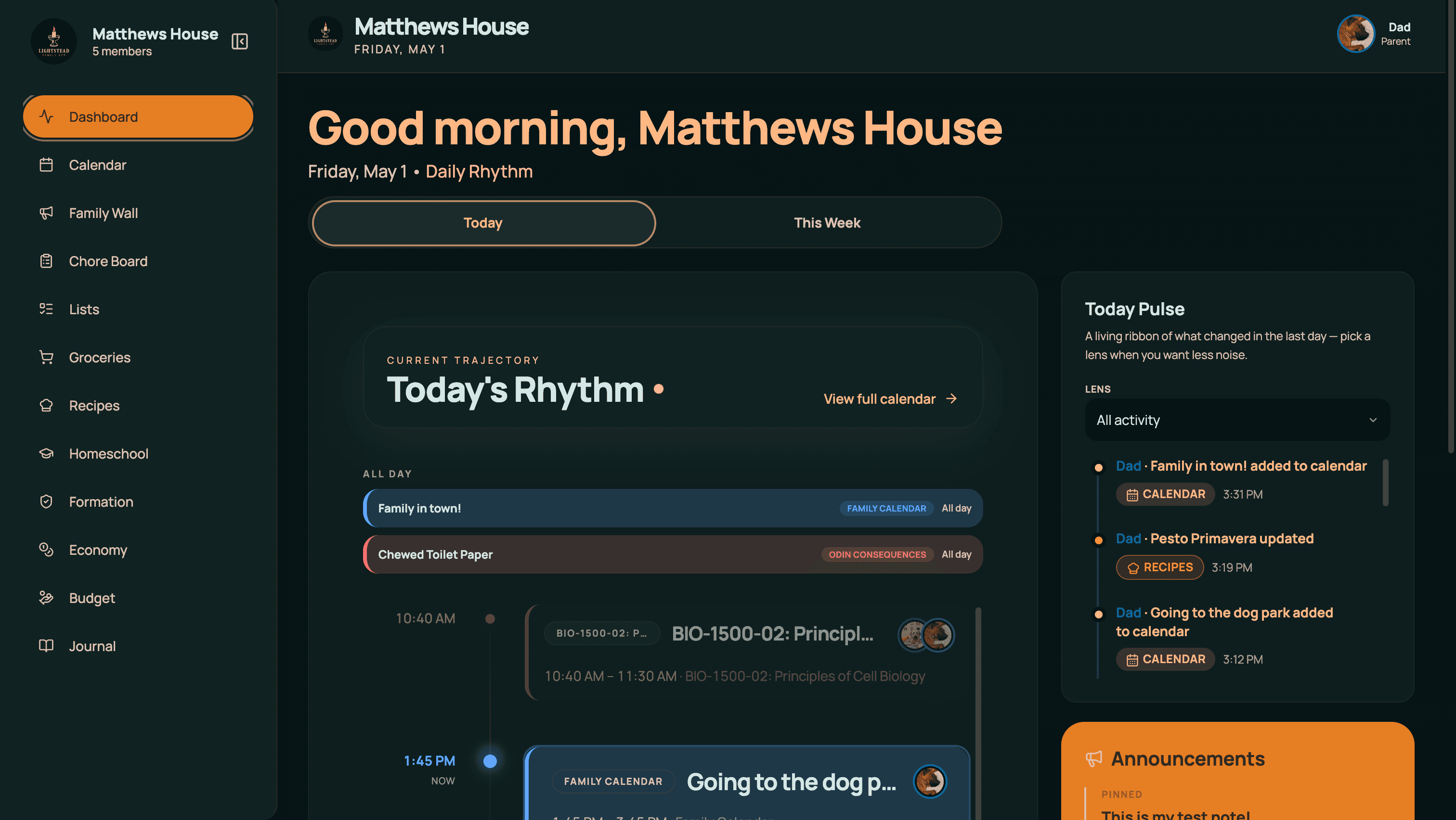
§2
180 days at 4.5 hours — one of the few states with both minimums.
Georgia is unusual: most states specify days OR hours, but Georgia specifies both. 180 days per year, at least 4.5 hours per day. That works out to roughly 810 hours of instruction annually. The hours don't need to be in one block — split across morning and afternoon sessions, including supervised independent reading and project work, is fine. The attendance record proves the days; the daily hours don't require minute-level logging in practice. Most families track to a weekly cadence (5 days × 4.5 hrs = 22.5 hrs/week × 36 weeks = 810 hrs).
O.C.G.A. § 20-2-690(c)(4)
The GA compliance card shows current days and weekly average hours, with the 180/4.5 minimum as a target line. Daily green-dot attendance produces the day count; hours can be tracked at any granularity from "4.5 hrs by default" to per-subject hour entries.
Attendance + hours tracking
§3
Standardized test every three years, starting at grade 3.
Georgia requires a nationally normed standardized achievement test in grades 3, 6, 9, and 12 (every three years beginning at the end of grade 3). The test is administered by the parent, by a certified test administrator, or by a homeschool support group. Approved tests are any nationally normed publication (CAT, Iowa, Stanford, etc.). The student takes the test; the parent keeps the results on file. Georgia does not require the test results to be submitted to the DOE. They are retained by the family and produced only if specifically requested. There's no state-defined passing threshold — the test is for documentation, not gatekeeping.
O.C.G.A. § 20-2-690(c)(5)
Lightstead tracks each child's test-grade window (3, 6, 9, 12) and shows a reminder 90 days out. Test scores stored in the child's record build a 12-year progression once a student reaches grade 9; the test history becomes useful for high school transcripts and college applications later.
Test grade tracking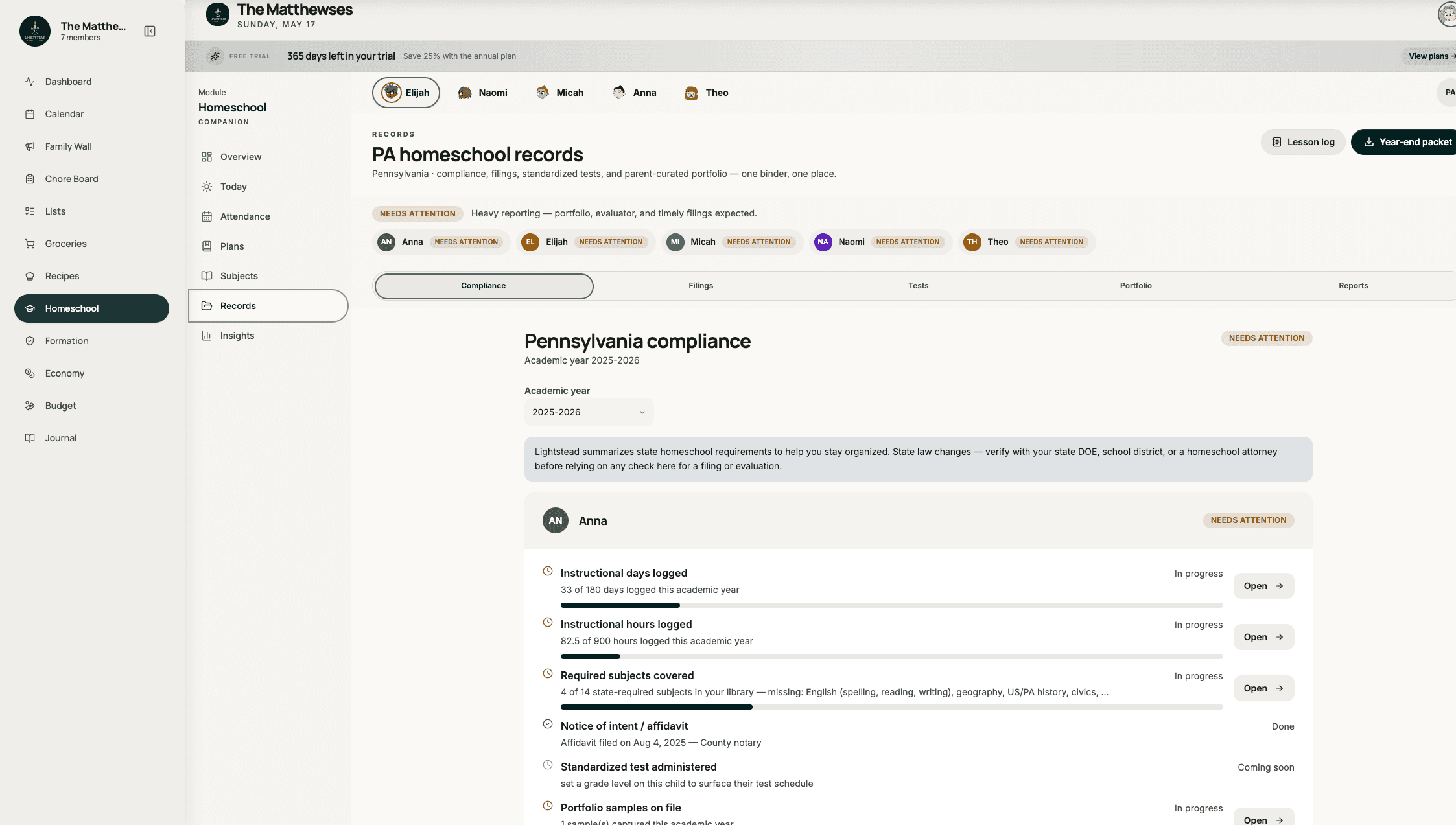
§4
Annual progress report — written, retained, not submitted.
Each year, the parent writes a progress report on each child covering the year's instruction and progress in the five required subjects (reading, language arts, math, social studies, science). The report is retained for three years from the year it covers. It is not submitted to the DOE unless specifically requested. In practice the GA DOE almost never requests progress reports. The retention requirement is for compliance posture, not active reporting. Most families produce a one-page summary per child per year — Lightstead generates this automatically from the year's lesson and assessment data.
O.C.G.A. § 20-2-690(c)(7)
The annual progress report pulls subject summaries, completed coursework, and assessment results into a one-page PDF per child. It auto-files into your records the day the academic year closes. The 3-year retention rule becomes indefinite storage by default.
Annual progress reports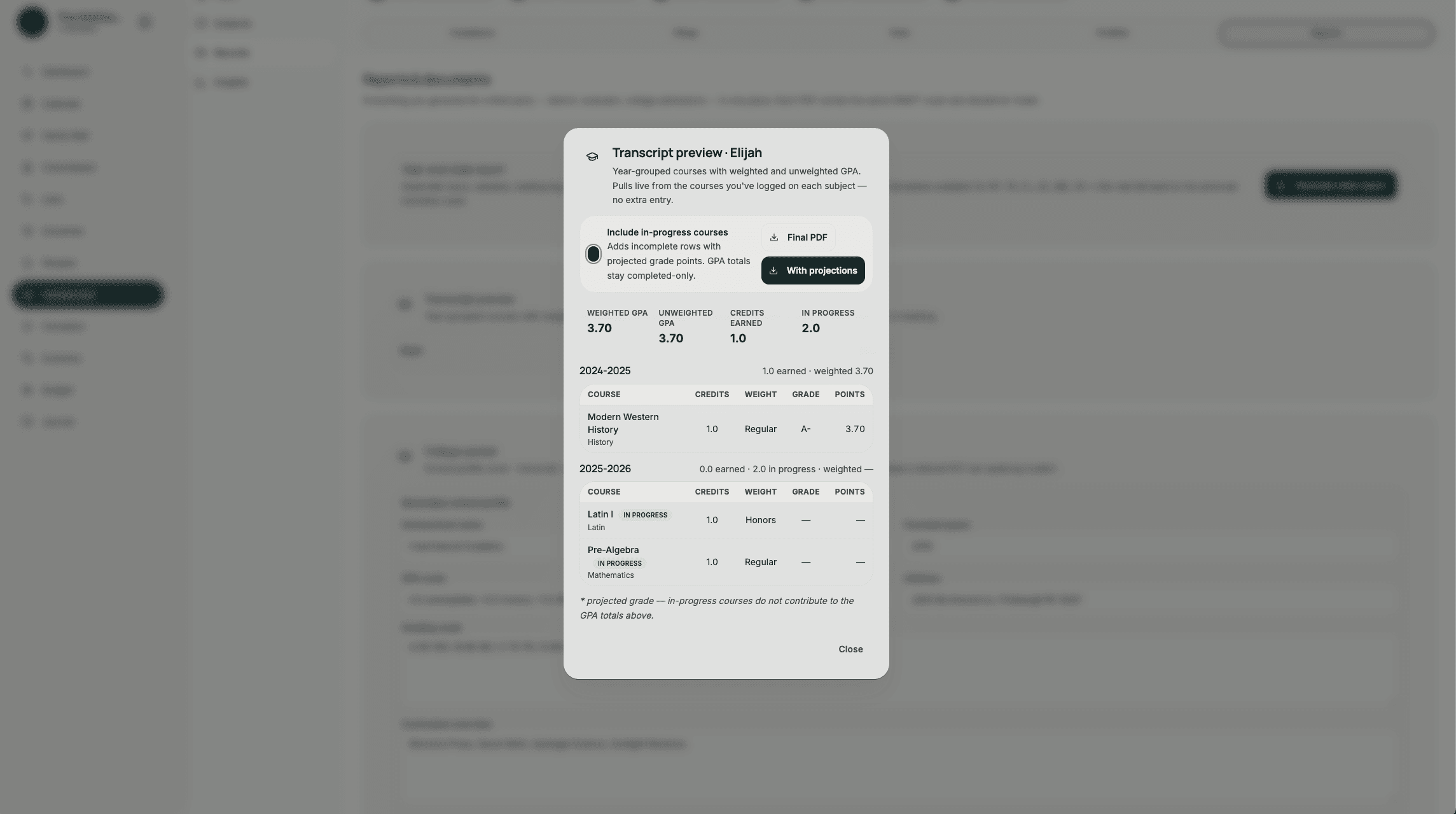
What people search for when they look up Georgia homeschooling.
When do I file the Georgia Declaration of Intent?
Annually with the Georgia Department of Education by September 1 (or within 30 days of beginning home instruction mid-year). The DOI is filed online through the GA DOE portal and takes about 10 minutes. It must be filed every year — there is no perpetual registration.
What subjects does Georgia require?
Five: reading, language arts, math, social studies, and science. Parents pick the scope, sequence, and materials within those subjects. The annual progress report covers progress in each of the five.
How many hours does Georgia require?
180 instructional days per year at minimum 4.5 hours per day — Georgia is unusual in specifying both. That works out to roughly 810 hours annually. The 4.5 hours don't need to be one continuous block; split sessions including supervised reading and project work satisfy.
When do Georgia homeschoolers take standardized tests?
Grades 3, 6, 9, and 12 (every three years beginning at the end of grade 3). A nationally normed standardized achievement test (CAT, Iowa, Stanford, or similar) administered by the parent, a certified administrator, or a homeschool support group. Scores kept on file but not submitted unless specifically requested.
What's the Georgia annual progress report?
A parent-written report on each child's progress in the five required subjects, retained for 3 years from the year it covers. Not submitted to the DOE unless requested. Most reports are one page per child per year. Lightstead generates them from the year's lesson and assessment data.
Do I need a high school diploma to homeschool in Georgia?
Yes. The supervising parent must hold at least a high school diploma or GED. No teaching credential or college degree required. Foreign secondary credentials of equivalent level are accepted.
Can my Georgia homeschooler join public school sports?
Generally yes, depending on the district. Georgia's Dexter Mosely Act (2021) lets homeschool students participate in extracurricular activities at their resident public school on the same terms as enrolled students, with academic eligibility verified by the parent. Confirm specific procedures with your local district.
What happens if I miss the September 1 deadline?
Late filings within a reasonable window (a few weeks) are typically accepted without consequence. Significantly late or skipped filings can create a truancy concern if a child was previously enrolled in public school. Filing as soon as you realize the miss is the right move — and Lightstead shows the deadline 30 days out so the miss is unlikely.
Related state guides
Stop tracking Georgia compliance in a spreadsheet.
14-day free trial. No credit card. We'll set up your filings, your hour log, and a portfolio starting point for Georgia.
Start free trial