
Homeschooling in Massachusetts— the prior-approval state — your education plan satisfies the superintendent.
Massachusetts is the rare state where you need approval before you start: each district's superintendent (or school committee) reviews and approves your annual home education plan in advance. There's no statute spelling out days, hours, or record-keeping — the rules come from a 1987 case, Care & Protection of Charles, which lets districts ask for a plan and check that instruction is roughly equal in thoroughness and efficiency to the local schools. That makes Massachusetts intensely district-by-district: what one superintendent waves through, the next may push back on, and the assessment method is whatever you and the district mutually agree to. The leverage you have is a clear, complete, exportable plan — and Lightstead's home-education plan builder and records packet are built to produce exactly that.
What Massachusetts requires, at a glance.
- Approval
Prior approval
The superintendent or school committee must approve your home education plan before instruction begins. Massachusetts is a prior-approval state.
- Notice
Annual education plan
Submit a home education plan each year describing curriculum, hours, materials, parent competency, and the assessment method.
- Days / hours
Not specified
No statutory minimum days or hours. Districts may ask you to describe your hours in the plan, but no fixed number is set by law.
- Subjects
Described in plan
Subjects and curriculum are described in your plan rather than enumerated by statute. The district reviews the plan for adequate coverage.
- Assessment
Mutually agreed
The evaluation method is mutually agreed with the superintendent — standardized testing, periodic progress reports, dated work samples, or another agreed measure.
- Standard of review
Thoroughness & efficiency
Instruction must show 'thoroughness, efficiency and progress' equal to the district's public schools (Care & Protection of Charles).
- Record retention
None required
No statutory record-retention rule. Keeping organized work samples and progress reports is still the practical way to satisfy the agreed assessment.
- District variance
Significant
Because the rules come from case law, not a checklist, approval terms and assessment expectations vary significantly from district to district.
§1
Get the plan approved before you begin — your district sets the terms.
Massachusetts does not have a detailed homeschool statute. The compulsory-attendance law, M.G.L. c. 76, § 1, allows education 'in any other manner' approved by the school committee or superintendent — and the Supreme Judicial Court's 1987 decision, Care & Protection of Charles, is what defines the process: a parent submits a home education plan, and the local superintendent or school committee reviews and approves it before home instruction begins. Because the framework is case-driven rather than a fixed checklist, Massachusetts is one of the most district-by-district states in the country. One superintendent may approve a one-page plan with a handshake; the next may want detail on curriculum, hours, and qualifications. The plan is filed annually. There is no statutory minimum number of days or hours, no record-retention requirement, no notarization, and no background check — only what your district reasonably asks for under Charles.
M.G.L. c. 76, § 1 · Care & Protection of Charles, 399 Mass. 324 (1987)
The filings workspace stores your annual home education plan and tracks which district it goes to, so the same plan re-files cleanly next year with only the year changed. HSLDA recommends sending the plan by certified mail with return receipt — Lightstead keeps the dated copy and approval correspondence in one place per child.
Home education plan & filings
§2
What goes in a Massachusetts education plan.
Under Charles, a district may ask the home education plan to describe the core elements of the program. In practice that means: the curriculum and subjects you'll cover, the instructional hours or schedule, the textbooks and materials you'll use, the competency of the parent providing instruction, and the method by which the child's progress will be assessed. There is no required hour count, and no state-prescribed curriculum, scope or sequence. Subjects are not entirely open, though: M.G.L. c. 76 § 1 names the subjects taught in the public schools — reading, writing, spelling, English language and grammar, geography, arithmetic, drawing, music, US history and the Constitution, the duties of citizenship, health including CPR, physical education and good behavior — and because the standard of review is equivalence to the district's own program, a plan is expected to cover that ground in substance. What the law does not do is dictate the materials, the sequence, or an hour count for any of it. The plan is a description of a reasonable program, not a fill-in-the-blank state form, and the level of detail a district expects varies. A complete, well-organized plan is the single biggest factor in a smooth approval, because it lets the superintendent verify thoroughness and efficiency without rounds of follow-up.
Care & Protection of Charles, 399 Mass. 324 (1987)
The plan builder assembles each required element from your existing data — your subjects and curriculum list, your schedule, and a parent-competency statement — into one document you can export for the district. The subjects list doubles as the curriculum description many superintendents ask to see.
Subjects & curriculum list
§3
How progress gets measured — you and the district agree on the method.
Massachusetts does not mandate a single assessment. Under Charles, the evaluation method is 'mutually agreed upon' between the parent and the superintendent. Accepted methods include a nationally-normed standardized test, periodic written progress reports, a portfolio of dated work samples, or another measure the district agrees to. This is a negotiation, not a requirement handed down — and it's worth settling at the same time the plan is approved, so there's no surprise at year-end. Because districts vary, some readily accept a portfolio of dated work while others prefer a standardized test; having organized progress evidence ready means you can offer whichever method the superintendent is comfortable with.
Care & Protection of Charles, 399 Mass. 324 (1987)
Whatever method you and the district settle on, the records packet stages the evidence: dated work samples captured as you go, a progress-report builder for periodic written summaries, and a place to file a standardized test result. Each work sample is timestamped when it's added, so a portfolio is already date-ordered by the time the district asks.
Records & work-samples packet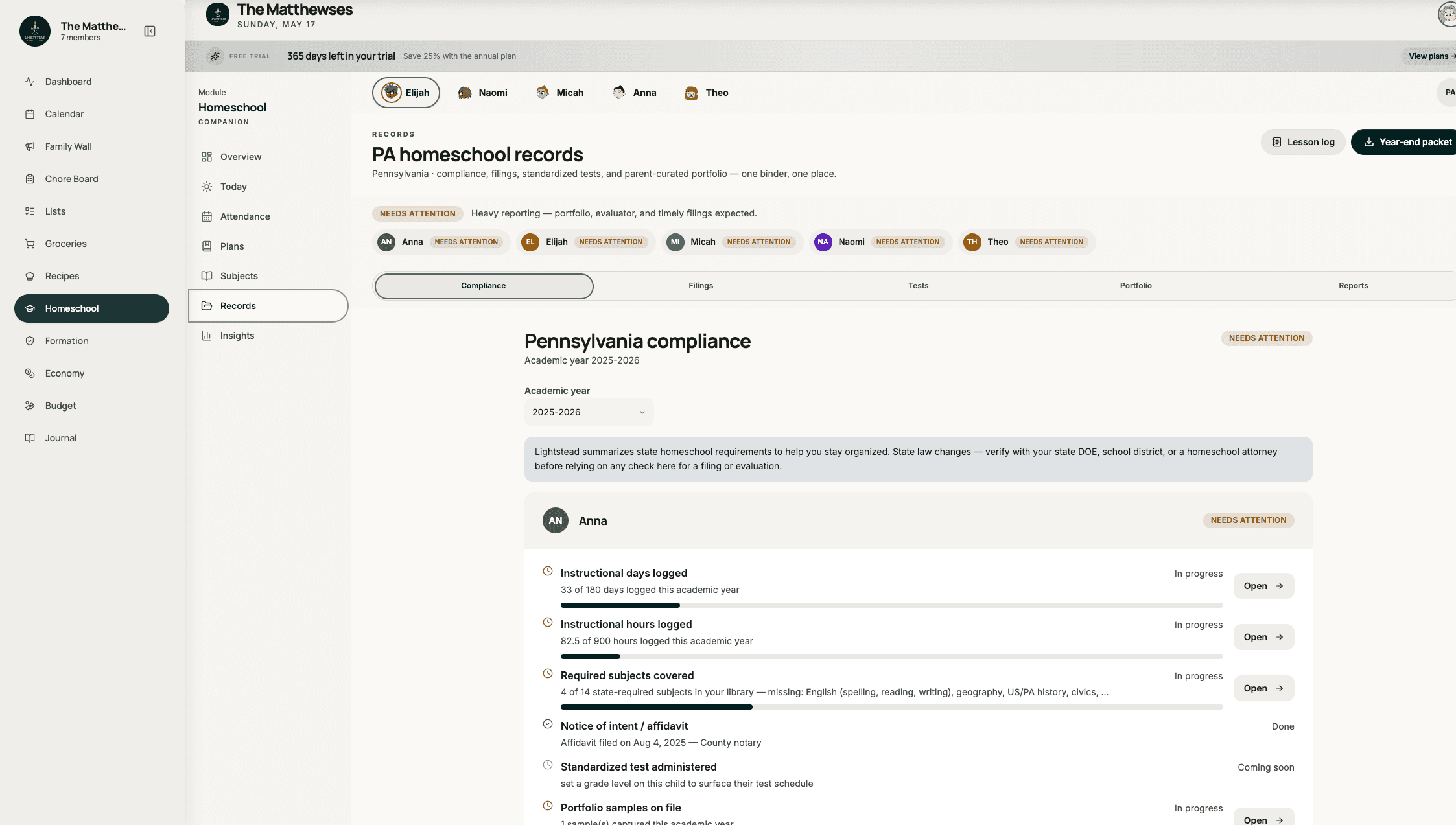
§4
Equal in thoroughness and efficiency — why a strong record wins.
The standard the district applies, set by Charles, is whether the home program shows 'thoroughness, efficiency and progress' equal to the instruction in the local public schools. The superintendent is not measuring your home against a perfect ideal — only against what the district's own schools deliver — but they are entitled to verify it. That verification is the whole game in a prior-approval state. A vague plan or a thin record invites questions, delays approval, and gives a skeptical district room to push back; a clear, complete, exportable plan and an organized body of progress evidence let the superintendent check the boxes and approve. The law gives the district discretion, so the practical lever a parent controls is the quality and timeliness of the paperwork.
Care & Protection of Charles, 399 Mass. 324 (1987)
The dashboard surfaces your re-approval and assessment reminders so the plan goes in before the year starts, not after — timeliness is half of a smooth approval. The transcript and progress-report builders turn your logged work into the kind of clean, district-facing summary that lets a superintendent confirm thoroughness and progress at a glance.
Dashboard reminders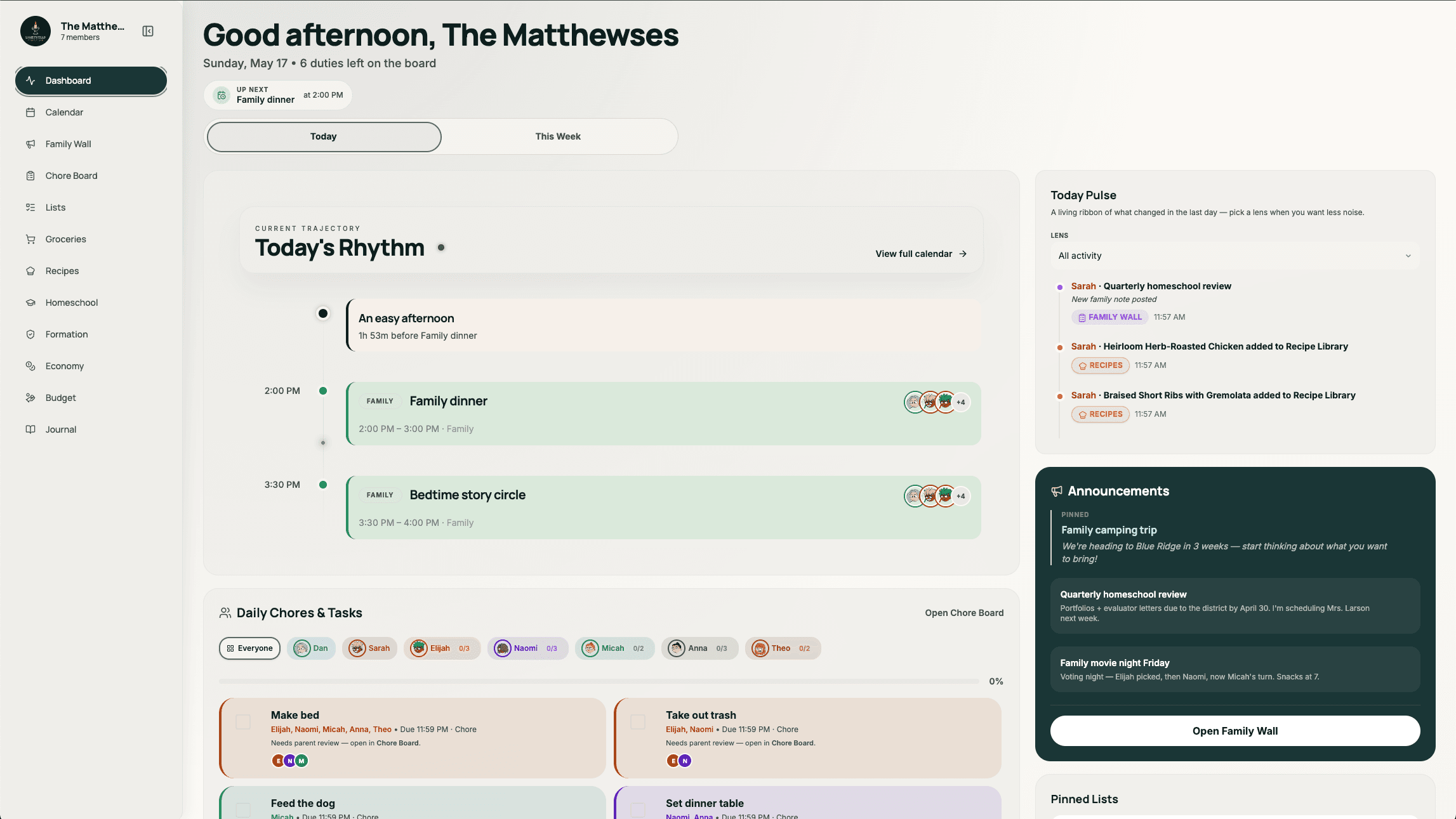
What people search for when they look up Massachusetts homeschooling.
Do I need approval to homeschool in Massachusetts?
Yes. Massachusetts is a prior-approval state. Under M.G.L. c. 76, § 1 and the 1987 case Care & Protection of Charles, you submit a home education plan to your local superintendent or school committee, and they must approve it before home instruction begins. Approval is sought each year.
What goes in a Massachusetts education plan?
A district may ask the plan to describe the curriculum and subjects, the instructional hours or schedule, the textbooks and materials, the competency of the parent teaching, and the method for assessing the child's progress. None of these are tied to a statutory minimum — the plan is a description of a reasonable program, and the detail a district expects varies.
Does Massachusetts require homeschool testing?
Not necessarily. The assessment method is 'mutually agreed upon' with the superintendent. A standardized test is one accepted option, but so are periodic written progress reports, a portfolio of dated work samples, or another measure the district agrees to. You and the district settle on the method.
How many days or hours of instruction does Massachusetts require?
There is no statutory minimum number of days or hours for homeschooling in Massachusetts. A district may ask you to describe your hours or schedule in the plan, but no fixed number is set by law.
Why is homeschooling so different from district to district in Massachusetts?
Because the rules come from case law (Care & Protection of Charles), not a detailed statute or a state checklist. Each local superintendent or school committee approves plans and sets the terms, so what one district accepts another may question. District variance in Massachusetts is significant — your experience depends heavily on your local district.
What standard does the superintendent use to approve my plan?
Under Care & Protection of Charles, the district checks whether the home program shows 'thoroughness, efficiency and progress' equal to the local public schools — not against a perfect ideal, just against what the district's own schools deliver. The superintendent is entitled to verify it, which is why a clear, complete plan matters.
What records do I have to keep to homeschool in Massachusetts?
Massachusetts has no statutory record-retention requirement. Even so, keeping organized, dated work samples and progress reports is the practical way to satisfy whatever assessment you and the district agreed to, and to answer questions during the annual approval.
How do I submit my Massachusetts home education plan?
Submit it to your local school superintendent or school committee before instruction begins. There is no notarization or background check required. HSLDA recommends sending the plan by certified mail with return receipt, so you have dated proof of submission if a question ever comes up.
Can a Massachusetts superintendent deny my homeschool plan?
A district reviews the plan against the thoroughness-and-efficiency standard, so it can ask questions or request more detail before approving. The practical lever you control is the quality and timeliness of the plan: a complete, well-organized, on-time plan with progress evidence ready gives the superintendent what they need to approve.
How often do I file a homeschool plan in Massachusetts?
Annually. The home education plan is submitted each year for approval before that year's instruction begins. Re-filing is usually a matter of updating the prior year's plan, which is why keeping last year's plan and approval on hand makes each renewal easier.
Does Massachusetts require a background check or teaching certification to homeschool?
No. Massachusetts does not require a background check or a teaching certificate. The plan does describe the parent's competency to provide instruction, but there is no certification mandate and no notarization requirement.
Related state guides
Stop tracking Massachusetts compliance in a spreadsheet.
14-day free trial. No credit card. We'll set up your filings, your hour log, and a portfolio starting point for Massachusetts.
Start free trial